Christopher P. Stephens, Bookman

Chris Stephens has been a book dealer since 1965 - earlier if you count childhood buying and selling.

Stephens has sold major collections to university libraries all over the world. He has operated appealing bookstores in Mt. Carroll, Illinois, Hastings on Hudson, NY and several in NYC, NY. He is a wholesale dealer to other bookstores all over the world.

Chris loves books.

Stephens now maintains a lively internet operation out of his new home in Scranton, PA.


Showing posts with label 2000s. Show all posts

Sunday, March 13, 2011

FAS at the National Endowment for the Arts

In 1974, a couple of years before he founded riverrun, and while he was still working at Harper & Row, Frank Scioscia was invited to serve on the Literature Advisory Panel of
the National
Endowment for the Arts.

What an honor! He accepted. Who wouldn't?

I think Fran McCullough - on the Panel herself at the time - recommended him.

The invitation was signed by Nancy Hanks, the Chairwoman of the National Endowment for the Arts from 1969 to 1977. Perhaps she could better be called the Queen of the Arts. She built up the federal program and earlier was behind the scenes at the inception in 1964. Before the inception actually. She worked with the Rockefeller Brothers Fund helping to lay the groundwork for what was to become the National Endowment for the Arts. She was a remarkable woman. And she signed Scioscia's letter! Not that a signature on an official letter represents much of a relationship, I guess. I'm posting it though.

Frank got a very big kick out of serving on the panel.

Later he did have more than a signature; he had a very substantial and treasured friendship with a different Chairman of the National Endowment for the Arts: Dana Gioia.

Gioia was Chairman from 2001 to 2009. He instituted all sorts of dynamic and satisfying projects for us. For us citizens. I have two special favorites: the Big Read - almost a national book club - and the veterans' memoir writing project.

Dana Gioia ambled into riverrun bookstore one day. It was just exactly his kind of store. Gioia was just exactly Scioscia's kind of customer. The men hit it off immediately. Both had unlimited interests. Both were down-to-earth kind of guys.

When they met a short time later, the two Marys, their wives, hit it off as well. Dana and Mary Gioia moved to Hastings on Hudson. They were up the hill and slightly south along the aqueduct from riverrun.

The way I choose to remember it is that Dana said, "I want to live in a place that has a bookstore like this," and his Mary agreed.

Frank Scioscia did not live long enough to see Dana Gioia become Chairman of the Endowment for the Arts but it wouldn't have surprised him.

That appointment would have been the absolute only thing about George Bush that Scioscia could have applauded. And he would have applauded mightily.


more about the National Endowment for the Arts

how to apply for a grant in literature

Art Works article on Dana Gioia

A whole bunch of fascinating video clips on Big Think, of Dana Gioia chatting about different things that interest him. http://bigthink.com/danagioia

Book Rags biography of Nancy Hanks

Sunday, August 9, 2009

Thursday, July 9, 2009

Andrea at riverrun


Today was Andrea's second day of work at riverrun. Her grandfather gave her the reins.
On the first day she learned about packing orders. The packer is aiming for neat, secure packages - the kind I never quite mastered. The packer has to watch out too. Watch to be sure the books ordered go to the actual person who ordered them rather than someone else who ordered something different. Watch to be sure you don't slice yourself up with the very sharp cardboard cutter. Watch to be sure the packages are entered in the log.
Andrea did all that beautifully on the first day.
On the second day Andrea learned how to do a box list. This means you squeeze through narrow passageways and reach way up over your head for heavy boxes of books. You carry them elsewhere, open them up, and check the contents against a list of what is supposed to be the contents. You resolve discrepancies.
Andrea did that all beautifully on the second day.
The thing is though, that when you're given the reins, there are more than 2 days worth of lessons that you should know. She hadn't been shown the map of the store, so she couldn't help customers locate books. She knew there was a riverrun website, but not the address, so she couldn't satisfy an impatient telephone inquirey. (riverrunbookshop.com) She hadn't been shown how to work the cash register, so customers had to supply exact change, which she laid out neatly in front of the register.
Why did a 16 year old with 2 days' experience have the reins anyway?
Because Chris got an irresistable call from a house with a library available that day only. It was a library entirely in Hungarian and Chris does not actually read Hungarian.
"Andrea, there's a library that sounds promising. Do you mind holding down the fort for a couple of hours?" She didn't. Not even when it turned out to be for the whole day. I came down to help her close.
"So. Your grandfather didn't make it back," I said to her.
She laughed. "No. And he sounded ecstatic when he told me he was delayed."
Indeed that part of the book business - the part of going into houses and buying books - is his favorite. It the ecstatic part.

Thursday, June 25, 2009

Forrest Orick at riverrun


Forrest visits the bookstore his great-grandfather founded and his grandfather now owns and runs.

Sunday, June 21, 2009

A Tribute to Six Important Fathers on Fathers' Day

July 1988

FRANK SCIOSCIA - Father of riverrun bookstore


FAS is shown here with his 2 oldest grandchildren - themselves now the fathers of my very fine grandchildren.


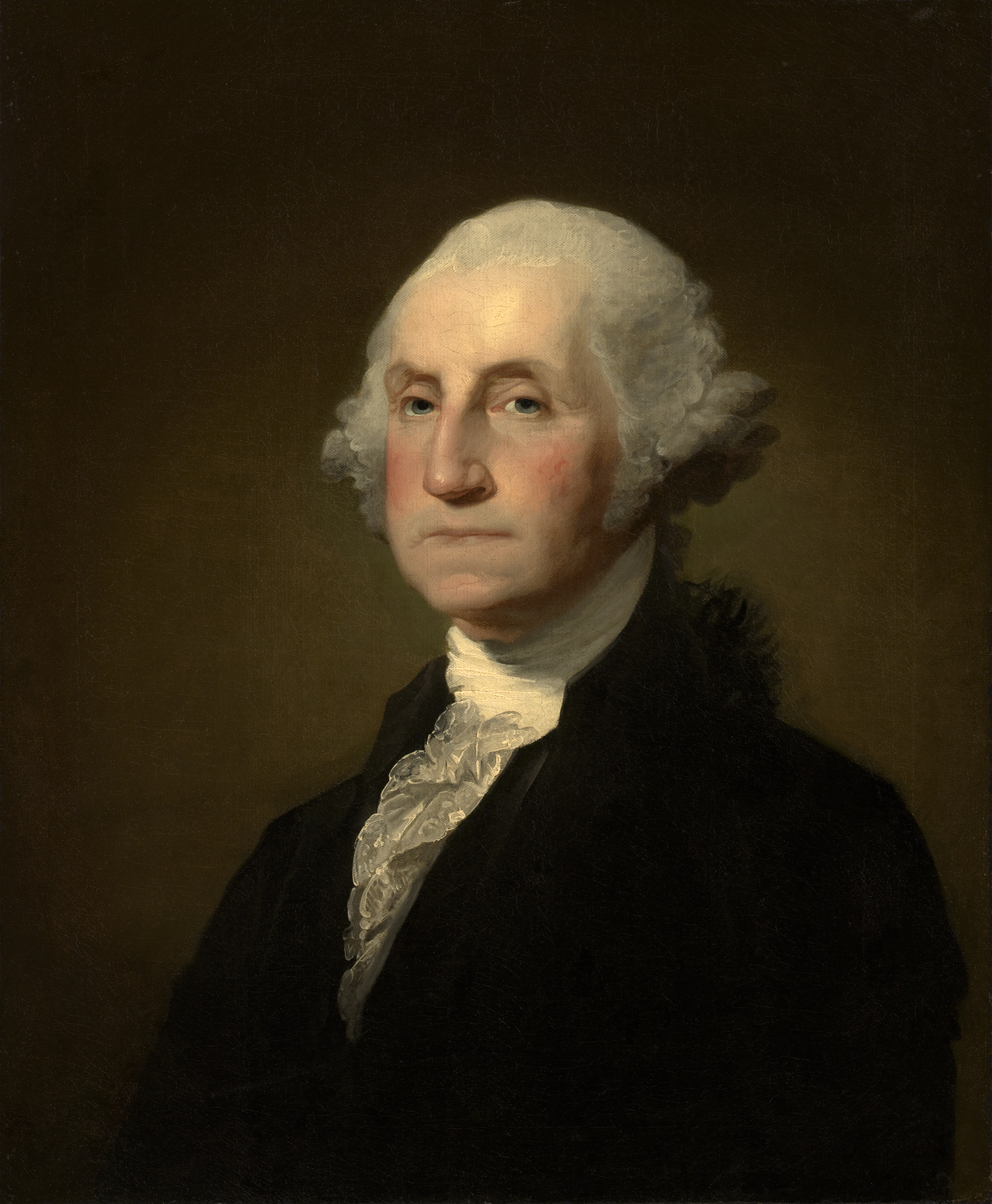
GEORGE WASHINGTON - father of our country

File:Gilbert Stuart Williamstown Portrait of George Washington.jpg

CHRISTOPHER P. STEPHENS - Current proprietor of riverrun as well as the remarkable father of my remarkable children.


JOHANNES GUTENBERG - Father of Modern Printing


File:Gutenberg.jpg

Friday, June 19, 2009

Irene Zanolli


Irene is working at riverrun for the summer. She's a fast learner and a hard worker. She talks to customers, processes orders, files books, and packs books. We're glad to have her.

Regretfully, come September we won't have in riverrun. She'll be trekking in the Himalayas!

Monday, June 15, 2009

Boots


Whenever we have Gordon Parks' photography in stock, we file it in this alcove.
This is riverrun's section for books on photography, fine art, and decorative arts.

These aren't the photos I wanted for this post. I wanted a photograph of Gordon Parks' clothes closet, especially featuring his many pairs of cowboy boots.
Cowboy boots were not exactly a Parks' trademark, but they were definitely one of his basic wardrobe staples.
Sadly I don't have a photo of Gordon Parks' boots. A good opportunity to get one was wasted. I wasn't there and Chris, who was, didn't take it.

Chris Stephens and Wyatt Houston Day were invited to Park's apartment to look at his books a short time after Parks died in 2006. He had marvelous things in a bright, spacious apartment on the east side of Manhattan. Several of Parks' ex-wives were there when the bookmen arrived. The wives were gracious and lovely. They encouraged the bookmen to look everywhere.
In the process of looking everywhere, Chris came upon Parks' boot-filled closet. "Oh no," Chris protested when I asked if he had taken that picture. "That would have been intrusive."

I don't see it that way. Wouldn't it have been a great photo to have? So many of Gordon Parks' photos reached into the un-public parts of peoples' lives. I don't think he would have minded. I don't think the wives would have minded either.

Gordon Parks was his parents' 15th, and last, child. He was born in 1912. His parents were Kansas farmers. Gordon Parks was bursting with many talents outside the realm of normal farm life. Despite his difficult early years, Parks' talents carried him high and wide. He was accomplished. He was influential.
I knew he was a photographer - stirring photos rushing in at life and shouting out at us. He also had many other talents. Parks wrote novels and memoirs and poems and screenplays and musical scores. He directed Shaft and Shaft's Big Score. He wrote, produced, and directed The Learning Tree. He also wrote the memoir on which it's based and wrote the music for the movie.

Gordon Parks was admired for his many talents and for his wide-ranging projects. He was well liked too. He was famous for being so likable.
When Chris and Wyatt got into Parks' apartment, some things had already been sent to auction. It didn't matter. There were still many treasures and fascinating items left. The bookmen went for the many fine books. I would have gone for the boots.


memoirs by Gordon Parks:
1963 - The Learning Tree
1966 - A Choice of Weapons
1979 - To Smile in Autumn
1997 - Half Past Autumn

photography was my choice of weapons
NY Times article/obit

Saturday, June 13, 2009

Collage Books


Michael Orick designs one-of-a-kind collage pop-up books. They are masterpieces. Orick wields an exacto blade with precision and inspiration. The art-work books are filled with unexpected juxtapositions, surprise flaps, and wheels that turn images.

Michael Orick hosts a weekly collage night at his home in Santa Cruz. Like minded artists gather Wednesday nights for creative evenings of a high-tech, high-art version of cut and paste. The Dead Cow Gallery in Santa Cruz hosted an exhibition of the collage night artists during April. It was grand fun but not as much fun as Wednesday nights.


see more from collage artists around the world at collagenight.com

Friday, June 12, 2009

CPS and MHS


summer 2008

Two Big Readers:

Christopher Stephens and
Mary Scioscia


Friday, June 5, 2009

Ross Priel - Journalist

January 2009


    Ross Priel has been an enthusiastic friend of  riverrun for a very long time.

  He's pictured here with Christopher Stephens and a hefty selection of darned good books. 

Thursday, June 4, 2009

Closing - Gotham Book Mart

Andy Brown in his office at Gotham Book Mart
photo by Christopher Stephens, September 1979
The Gotham Book Mart did not shut down after its comprehensive sale of inventory. I thought it might. I thought people wouldn’t care much for new books on old shelves.
But Andy Brown knew modern literature. He had a good eye and the replacements he bought made a fascinating array of new books. Besides, the original manuscripts were still there. They had not been part of the sale to New Mexico. They lent prestige. And there were surplus copies of books that Gotham had published salted in amongst the new titles.
The history and the cache of the place where wise men had fished for so long helped maintain a momentum. The Gotham went on for 30 more years.
We were in the city for the rest of that decade. Christopher Stephens stopped into the Gotham frequently. He was pleased to see its continued success.
During the 1980s we moved our book operations north of the George Washington Bridge. We rarely visited.
There were rumors of money troubles, but who in the book business doesn’t routinely buy books beyond cash flow? There were hints of discord over the ownership of the building and other disagreements. We heard about it when Frances Steloff died and when Gotham changed locations and when financial difficulties got bad enough to threaten the store.
When Gotham finally did close its doors, there was plenty of loudly mournful reaction. (There might be a profound insight to be discovered in the fact that the media wailed when the store shut down in 2007, but not when it sold its guts in 1974.)
The people who wrote about the end and the gift to the University of Pennsylvania know a lot more about it than I do. I'm putting some links to their articles in. But Gotham closing is not really my story anyway.
There are ups and downs and various inevitable woes of commerce. For me the big story is that, in spite of everything, the grand Gotham Book Mart was open for business for almost 90 years.
Village Voice article
historical review of Gotham with pictures and info about Penn State
gothamist's take on it
Edward Byrne, poet and editor of Valparaiso Poetry Review remembers

Friday, May 22, 2009

George Jellinek At Home


George Jellinek gave us all the gift of his "The Vocal Scene" program on WQXR (and others - it was syndicated on radio stations all over). The show was wonderful. He is wonderful.

Jellinek comes into riverrun from time to time to buy books and records. Since he retired from his show in 2004, he hasn't been adding much to his collections. In fact, now Chris visits him from time to time to time to buy books and records.


George Jellinek has a work study filled with books, records, CDs and photographs of opera stars he knows.


This is the computer where he writes. Just to the left of the computer, under the desk's glass top, is a photograph of his family - parents, sister, and self. He is the young man standing on the right.


This afternoon George and Hedy Jellinek welcomed both Chris and me into their home. I took pictures. They were quite gracious and it was fun.


Books by George Jellinek:
My Road to Radio and The Vocal Scene: Memoir of an Opera Commentator
History Through the Opera Glass: From the Rise of Caesar to the Fall of Napoleon
Callas: Portrait of a Prima Donna

an intriguing list of articles by Jellinek for Fanfare magazine, (articles themselves available to members)

Wednesday, May 6, 2009

Bookmen

May 6, 2009

These four book dealers happened into riverrun today. They enjoyed talking with one another.
l to r

Wyatt Houston Day - sets up the yearly African Americana sale at Swann Galleries. He makes appraisals, and buys and sells African American material.

Mark Booker - is also interested in African American material, but likes to buy all sorts of things. He sells at flea markets in the area. "I could go to a flea market every day of the week," said Mark. "I must be crazy, but I like it."
Christopher P. Stephens - has had various book selling organizations since 1965. Chris has been the proprietor of riverrun for 15 years.

Gil Mott - is a book dealer in Connecticut. He has a large internet business specializing in history, philosophy and music. He is always on the lookout for unusual finds.
webpage: mottbooks.com

Thursday, April 16, 2009

Opening Day

photo taken by an accommodating stranger

     The new Yankee Stadium is open for its first regular-season game.  It's a beautiful day for it.  Clear sky.  Warm sun.  Spring's sweet promise has touched trees and highway medians in New York City.
     Christopher Stephens and his four children are baseball enthusiasts and Yankee fanatics.   Chris and his daughter, Isabel, are at the game now.  (Top of the fifth, 1-0 Cleveland, Posada just threw out a renowned base stealer.  I know this and pass it on only out of family loyalty. )
     No worries for riverrun while Chris is truant.  Martin Kelly, riverrun manager, is a Mets fan.  Martin is on the job, attending to riverrun business.   

Tuesday, April 14, 2009

More Conversation With Dan Frank


As a student, Dan Frank was interested in philosophy and poetry but he wasn’t convinced that the life of a poet or of a philosopher was for him. Luckily he ventured further afield because, as Dan says, “I love publishing.” And publishing loves him.
Dan Frank had a couple of small jobs before he became an editor at Viking.
“I was really lucky. I got there just about the time Penguin purchased Viking. There were great editors at Viking – like Cork Smith. He was a real Pynchon enthusiast and he had such a good editorial eye. And Alan Williams. Quality history.
“With the Penguin/Viking combination, they were pushing some of these fine editors out, but I got to see their work”
Dan talked about the editorial eye. “It’s completely grounded in the individual’s interests as well as his curiosity and urge to push on for more. You’re thinking ‘I want to know more about this,’ but it’s really your familiarity with the subject that allows you to recognize something you haven’t seen expressed that way before. You’re reading, and you say, ‘Oh my god! I’ve never read a book like this.’ And that’s what you want to publish.
“For example, here’s someone who is looking at Einstein as a man who is thinking as dreaming.”
Is that real, I interrupt Dan. “Yes. Einstein’s Dreams, Alan Lightman.
“An important aspect of the editorial eye is that it’s shaped by your early encounters with reading – your earliest sense that what you’re reading is entirely different from what you’ve read or thought before.”
So what is Dan Frank’s eye exactly? What does he want to publish?
“I want to find books that are still going to be read 40 years from now. I’m not as interested in the first 6 weeks of a books life as I am in the next few decades. I want books that offer writing and concept that isn’t dated. There is this thing that rarely gets talked about in publishing – the truly great authors that may or may not have been a success in their time.”
Dan Frank’s editorial eye has far reaching vision. He wants to publish books whose greatest success may come beyond our time.
“Of course your employer wants you to find books that will sell – will make money now. That has to be one criterion in the selection. But consideration of the book market today need not be the dominant criterion. At Pantheon, we’re allowed to be quite idiosyncratic. We make money on Alexander McCall Smith and on the high quality back list. We’ve been publishing books for the future all along.”
I wonder about some of the authors that Dan Frank most likes. He spins out a few of his favorites.
“David Abram. The Spell of the Sensuous. It’s a book of natural philosophy, about how language comes out of human experience with the earth. Abram has a lot to say and he says it his way. Sometimes he takes my suggestions but other times he doesn’t want to make my changes. This book speaks to many. He has become hugely influential in the environmental movement.”
“Richard Holmes is a big biographer of romantic poets. He’s written a wonderful book, Footsteps: Adventures of a Romantic Biographer. He writes about what a biographer does – about how he excavates his subject. Holmes, the writer, is taking you on a tour of his own workshop in a way. He shows you how it’s done, what interests him, how the research works.”
“Joseph Mitchell. Great writer. He wrote in the 30s, 40s and 50s. McSorley’s Wonderful Saloon. The Bottom of the Harbor. Up in the Old Hotel. I convinced him to let me reprint his essays. He wanted it done a particular way. He wanted everything in one volume.”

Dan Frank has lots more favorites. He sparkles with enthusiasm for authors, for books, for publishing, for reading. His enthusiasm is quite contagious.

Monday, April 6, 2009

Dana Gioia

2 b&w photos - photo credit Christopher P. Stephens 
 Dana Gioia and Frank Scioscia in front of riverrun 1984

     Dana Gioia discovered riverrun shortly after the store opened.  He and Frank Scioscia became fast friends.  They were a generation apart but they shared a way of thinking about books, authors, readers and life.
     Dana's wife, Mary Gioia, and Frank's wife, Mary Scioscia also became close friends.  The two Marys  belonged to the Hastings Literature Club which celebrates its 100th year anniversary this autumn.   The couples saw each other often.
     When they moved to Hastings both Dana and Mary Gioia worked in management at General Foods.  Dana Gioia kept his poetry on low profile, really no-profile, at GF.  In a parallel world to his work there, his poems were being widely published.   The way I remember this story (but have not been able to corroborate) is that Esquire Magazine ran an article, in the early 1980s,  on the most promising young new poets.  Dana Gioia was named as one of the best.
      The poetry-cat was out of the bag.  Some people had trouble reconciling excellence in poetry with his excellence in business but it was disparate talents like these that later made him so exceptional a Chairman at the National Endowment for the Arts.
     He became the Chairman in 2003, when the organization was riven by external controversy and internal confusion.  He was enthusiastic about art for the widest public.  He introduced great programs like memoir and poetry by returning soldiers, the nation-wide reading project - The Big Read,  community Shakespeare, and more.
     Dana Gioia left the National Endowment for the Arts this January.  He stopped and visited riverrun "on his way" to California.
     I wonder what he will do next.  With his many interests, his many talents, I bet it will be another something big.


Some students at Lyceum Kennedy in NYC enjoying The Big Read with Fahrenheit 451


Dana Gioia's poetry collections: Interrogations at Noon,  Gods of Winter,  Daily Horoscope
Gioia's other books:  Disappearing Ink,  Can Poetry Matter?, Barrier of Language
There are many other articles, essays, poems, anthologies, translations and also libretti

Dana Gioia's website
some video clips of Gioia
a very interesting excerpt from a commencement speech given by Gioia and printed in WSJ

Sunday, April 5, 2009

Isabella Bannerman Draws at riverrun


drawing copyright Isabella Bannerman 2009

Isabella Bannerman visited riverrun last week. Chris showed her around the store. She took out her sketchbook. At first she thought of a cartoon picturing proprietor Chris Stephens as a Meriwether Lewis or William Clark, bushwacking his way through a wilderness of books in the store.
That would have worked. Riverrun contains some dangerous passageways. ("Do you want me to help tidy up a little?" Isabella asked.) Long corridors between shelves in the back are like canyons. Open areas in the front are mighty vistas.
In the end, her vision could not be contained within walls. The magnificent palisades across the Hudson became books. Meriwether Stephens points the way.

Isabella Bannerman is the Monday cartoonist for the syndicated Six Chix strip. Her off-beat humor is a great treat.
There will be an exhibit of Isabella's work at the Station Cafe in Hastings on Hudson on April 25th. You can catch her Mondays in any one of hundreds of newspapers, or anytime on the internet.

Isabella Bannerman's website
Six Chix website (I especially like the painting of Kinally Cove posted there on March 6)

Friday, April 3, 2009

A Conversation With Fran McCullough - Editor

I asked Fran McCullough if it was okay to include a quote from her about publishing going to the dogs, in my March 12 post. She said "sure, and that's not all."
Fran told me how the grand old industry turned not-grand in the early 1970s. "A man at Harper's typified the change. Tad Akaishi. He was briefly head of the trade department but he wasn't a real bookman."
One wonders how someone who wasn't a real bookman became head of Harper's trade books. McCullough explained.
"First he was a Korean minister and then he was the head of the religious department, which is generally not one of the high visibility profit centers in publishing. Under Akaishi, Harper's religious department was extremely profitable. People asked him how.
" 'Easy,' he said. 'Keep the best sellers in print. Drop the others. Don't take chances."
His successful publishing philosophy may have catapulted him to a head position but it was anathema to McCullough. Other editors found it repellant too. Fran tells about a philosophical collision.
"Tad summoned all the editors. He wanted to get everyone on board the Harvard Business School model. The Love of Literature model wasn't necessarily taking them to Profit City. He wanted to know the editors' plans. He asked Joan Kahn first. You know Joan," Fran said to me. "She had her own mystery imprint. Tad asked about her five-year plan.
"Joan spoke clearly. She said, 'My plan is to find the best books I can and to publish them well.' 'No, no,' said Tad. 'I mean what is your publishing plan? What are your projections? What numbers do you see in the future?
"Joan stood her ground. She said it again. 'I intend to find the best books I can and to publish them well.' All the editors agreed with Joan.
"Someone else said, 'Every book we publish is an experiment.' "

Those editors who follow the Love of Literature model look for the best books. They pour their hearts into them and hold hands with the authors and publish the books well. After that they wait and see. That's because they know that each book they publish is an experiment. Quality is part of it. Chance is part.
Fran says, "In the old days, when the Love of Literature model prevailed, literary editors were trusted to sign up books they loved and few other questions were asked. No one can do that anymore, though it's assumed that editors love what they publish - but they also have to be able to argue persuasively that these books will be successful and support their arguments with numbers. So does the Biz School model work? Not at all, but it lets everyone off the hook by pretending to be scientific, and its so pervasive now that it's virtually impossible to try any other system that might be more realistic."
The meeting Tad Akaishi held early in the 1970s was just a skirmish. The editors won that one, but over the decade they lost the war.
"But Tad Akaishi wasn't really a bad guy. He was just ahead of his time and in the wrong place. Eventually I came to like him. He had interesting other talents too. For instance, he knew a technique for walking on bad backs and making them feel better. You'd lie on the floor, right there in the office and he'd walk on your back."

In college Fran McCullough won the competitive Madamoiselle intern contest. It was the same contest that Sylvia Plath had won and made famous in The Bell Jar. Fran was disappointed to be matched with Bennett Cerf for her internship, but she learned a lot about publishing.
"Cerf told me, 'Publishing is a business, like the butcher business.' It was very shocking to me at the time, but of course, it couldn't be truer."

In the early 1970s Fran McCullough was a poetry editor. Later when backlists and insightful, interesting poetry weren't bottom-line material, McCullough became a cookbook editor. This is not the radial transition it may seem. Fran McCullough is a magical cook. She makes poetry out of meals.


Fran McCullough's cookbook website
an interesting paper comparing Sylvia Plath and Iranian poet Forough Farrokhad - bibliography includes poetry edited by McCullough
Bennett Cerf profile
1945 announcement of Madamoiselle contest

Monday, March 30, 2009

Ivy


left April 1988 - riverrun
right January 2009 - riverrun


Isabel left today. We hated to see her return to Boston but she did leave the riverrun order table caught up. She pulled orders and wrapped packages all week.
Isabel has been a bookstore kid ever since she was born. For the first 8 years of her life, she lived in a bookstore. In a sense. Her father, Chris Stephens, ran his book operation from our home.

I worked outside. During Isabel's first year, I ran a new bookstore at Masters School in Dobbs Ferry. The school wanted to spruce up it's textbook distribution and I enjoyed widening the inventory to include trade books, posters, stationary and gifts. I went to my first wholesale show - the Stationary Show at Jacob Javits Center - in May 1986. Isabel was less then 2 weeks old. She came along. We had fun together.

When the new Masters bookstore opened in the autumn, Isabel was there. Each day I carried her to work in a basket lined with pink & white gingham. The students came to see her as much as to buy books.

The next year I left Masters and worked in heaven. riverrun bookstore. Frank Scioscia, Isabel's grandfather, was delighted to have her in the store with me. She toddled over the long red carpet and browsed the shelves.

Later still Isabel had her own little office in the back of riverrun behind some shelves. She bustled about in her private space, or came and helped in the main part of the store.

When Isabel was old enough, she went to school. The school bus picked her up in the mornings near our house. In the afternoons, the bus left her off on the corner of Warburton and Washington so she could walk down the hill to riverrun.

Isabel worked in riverrun in her high school years and during college vacations. She graduated last year from a Great Books college, St. John's in Santa Fe. Appropriate for a book store kid. Now though, she's taking pre-med courses in Boston.

Some say that being a doctor is a good job, a good life. But really. Can it compare to the satisfaction of working in a bookstore?