Christopher P. Stephens, Bookman

Chris Stephens has been a book dealer since 1965 - earlier if you count childhood buying and selling.

Stephens has sold major collections to university libraries all over the world. He has operated appealing bookstores in Mt. Carroll, Illinois, Hastings on Hudson, NY and several in NYC, NY. He is a wholesale dealer to other bookstores all over the world.

Chris loves books.

Stephens now maintains a lively internet operation out of his new home in Scranton, PA.


Showing posts with label 1980s. Show all posts

Sunday, January 24, 2010

Music at riverrrun - 1


Many evenings in the late 1970s and the 1980s riverrun rollicked with music. Steve Kanfer was the ringleader. He played the saw, the washboard, and the spoons with gusto. His buoyant enthusiasms drew in plenty of other musicians.

Tuesday, January 5, 2010

John Socia - Old York Book Store

unknown photographer

John Socia opened the Old York Book Store in New Brunswick New Jersey after he’d retired from Sears. It was 1968. John was 65. He loved that bookstore just as he’d loved books all his life. Old York meant infinitely more to him than Sears and Roebuck did but he’d grown up in the depression and was grateful for steady work.
“I could never have quit a paying job,” he said. He laughed ruefully about the mark the depression made on him. He was 16 in 1929 when the stock market crashed and the economy quaked. There were younger mouths to feed. He left home.
In later years John recognized an early photograph of himself in a book about the depression. He was in a field picking peas with others who also rode the rails around the country looking for work.
John Socia was the second of 12 children. His parents were Italian immigrants. John was born with clubfeet. In a way, this turned out to be a good thing. It meant that he and his father made many trips to doctors and hospitals in New York and in Philadelphia. The examinations and operations were grueling but there were always trips to the big-city bookstores afterwards. The club-footed kid and the immigrant father spent many happy hours together in bookstores.
Many years later when his feet were fixed and his father was long gone, John Socia finally opened his own bookstore. Old York was near Rutgers University. It drew readers and collectors and dealers from a much wider circle. All sorts of people liked coming into his shop to discuss James Joyce or political philosophy or anything. John Socia of Old York Bookstore certainly did know his books. And he certainly was a fine man.
One time Socia told me he’d worried about his younger brother, Frankie. “He’s so innocent,” John said. “Unworldly, like an angel. He’s so good that he can’t imagine anyone being bad. ” Actually that is how I think of John himself. He was so trustworthy himself that it didn’t occur to him to be wary of whom he trusted.
Old York was open for 15 years. During that time Socia bought and sold many books. During that time he made many friends and admirers.
*****
Socia is mentioned in two, of the many fascinating articles by Stuart Mitchner - first paragraph http://www.towntopics.com/apr0109/book.php
An article about used bookstores and book dealers. Socia is described in the 3rd paragraph labeled “Ideal Book Dealers”. http://www.towntopics.com/nov0106/book.html

Monday, December 21, 2009

reading at riverrun

November 1988

Michael and Isabel Stephens at riverrun

Thursday, September 10, 2009

Ultramarine Disch


Tom Disch was an interesting conversationalist as well as an interesting writer. Chris Stephens especially enjoyed talking with Tom. "He was lively. He was ready to discuss any subject. He knew lots and you never knew what line he was going to take," said Chris.
Back when I was young, I was slightly intimidated by Disch's intellectual intensity. I was more comfortable with the gentler soul of Charles Naylor.
Disch and Naylor had what was essentially a long and happy marriage, just like Chris and I have. Unlike Chris and I though, their partnership was unrecognized legally and spousal benefits accrued to neither. For instance, during all those years that Naylor taught in the public school system, Disch was not covered under Naylor's medical benefits. Later, when Naylor died first, Disch had no legal rights to stay in the rent-controlled apartment he'd lived in for years with Charles. This is a societal injustice. It could be easily remedied.

Disch's book, M.D.: A Horror Story, is one of the Ultramarine Press limited editions signed by Thomas Disch. It came out in 1991, simultaneously with the Knopf first trade edition. Denis Gouey bound the limitation. There were 12 beautiful full leather copies and 38 half leather with marble boards.

In the early 1980s Ultramarine Press put Neighboring Lives, by Tom Disch and Charles Naylor, in print. Chris Stephens had purchased the entire remaining stock from Scribners.


Amazon customer reviews of The M.D. Horror Story

Sunday, August 30, 2009

A Conversation With Patricia Lowy - Graphic Designer & Artist


"I started working at William Morrow as a production assistant. Every week I had to type up a production report. And I didn't really know how to type. I was supposed to file all this stuff - manuscripts, cover art, production galleys, bound galleys, individual pages.
"It was totally boring but I had to support myself while I was in school."
Where was she going to school?
"Pratt had a special graduate program in graphic design. All the teachers were professionals in the field, so the courses were conducted in the evenings and weekends. It sounded great but many of these professionals had considerably more talent as artists than as teachers.
"There are professional artists that are also good teachers. They're rare. Milton Glaser is one example. I took a course from him at School of Visual Arts. He's an amazing graphic designer and he's an amazing teacher. A really great teacher. The Pratt program didn't have teachers like that.
"A better opportunity to learn came my way. Cynthia Basil, art director of Morrow Junior Books, took me on. I became her assistant and she taught me everything. She was great.
"Cynthia was quite a character. She chain-smoked Camels. She collected toys - all these old tin toys with moving parts. Her apartment was full of them. She never married. In a way, she never grew up. Maybe you need that Peter Pan characteristic to excel in junior books.
"In publishing, at that time anyway, you had to change publishers to get much of a salary increase. I moved to E.P. Dutton. Riki Levinson was a very talented art director at Dutton. Later I went Harcourt, Brace, Jovanovich. There I designed for adult as well as children's books."

What does designing books without illustrations entail?

"The designer makes decisions about the title page, the chapter openings, the whole way a book looks. The layouts are designed in pencil on tissue paper. Everything is ruled carefully. There weren't computers at this time. All work was long hand.
"In the 1970s and 80s publishers spent a lot of money getting type set. Now that's done more easily on computers. It's a big change. Then they hired retouchers. Now they use photo shop."

Patricia moved to McGraw Hill where she was the design supervisor. She worked on text books, which required quite a bit of design attention. "I earned more money but the work was dry.
"I left and became a free lance design consultant. Much more fun. My studio was above Shakespeare & Company. It was a convenient location. Dan and I lived nearby. Every publisher I'd worked for gave me work.
"One project was for William Morrow. I was designing a book by Charles Silverstein. My 5th grade teacher was named Charles Silverstein. He was a great teacher - memorable because you have so few really great teachers as you grow up. I wondered if it was the same person. It was! I telephoned. He wasn't phased in the least - he was thrilled to hear from one of his former 5th graders. He'd left teaching. He'd become a psychologist and had written several books, one of which I designed."

Patricia Lowy closed down her studio and her consultancy to devote more time to her sons. She remains a graphic designer and artist. Often her artwork blends unexpected combinations of paper and subject matter, or of emotional impact and technique. Some are drawn from an unusual physical perspective. All, even the ones of inanimate objects, burst off the page with bold vitality.
I especially admire her charcoal drawing that's behind Lowy in the photos. The decorative floral pattern, sort of like wallpaper, is a soothing screen you see at first glance. At second glance you see the body bags.

Patricia Lowy is always interesting to talk with. I might have badgered her too relentlessly for this particular conversation about her work in publishing. I appreciate this conversation though. I appreciate all of them.


NYTimes article by Vivien Raynor - Ms Raynor has a keen sense of self-importance but as an art critic she still has a distance to go. read paragraphs 5 and 6

Thursday, August 6, 2009

Signs


Steve Kanfer made the two RIVERRUN signs in the window on the north side of the street - 7 Washington. Kanfer brought them into riverrun in the 1980s. He brought plenty of books, plenty of customers, and plenty of music into riverrun as well. Steve Kanfer accompanied fiddlers and guitar players on his saw or his washboard.
Vincent Marchetti, a sign painter turned real estate agent, and a neighbor of Frank Scioscia's, painted the now faded BOOKSTORE sign as a gift. Marchetti enjoyed coming into riverrun from time to time. Kanfer enjoyed coming into riverrun all the time.

Tuesday, August 4, 2009

Edward Gorey


photo by Christopher P. Stephens about 1978

Edward Gorey has a distinctive, idiosyncratic art style that intrigues many. His adults are unsmiling. His children are somber - their pale, drawn faces clearly expecting the very worst from life. Which is largely what they get.
The detailed pen and ink drawings look like etchings. He illustrates a joyless world. Unless you count the fiendish delight one almost can't help feeling at the deliciously dark pictures of catastrophic episodes happening, or about to happen, or ominously threatened.
Edward Gorey illustrated in Boston. When he came to New York City, he met Andy Brown of Gotham Book Mart. The two became great friends. Andy promoted Gorey's work through the store.

Chris took this candid picture of Gorey at the New York is Book Country book fair one year. Gorey's glasses were rose colored, but you wouldn't know it from his drawing subject matter.

I didn't know Gorey, but I knew someone who did. In 1982 I took a couple of classes at School of Visual Art. In a superb color class, I made some friends. I was 33. They were younger. One night a couple of them made the long trek from 23rd Street up past the GW Bridge to my house for dinner. Barbara Ellmann came and so did a good looking young man. I think his name was Tom. This picture was hanging in our living room. They hadn't been here long before Tom stopped short, gawking at it.
"Where did you get this picture of Ted?"
"It's Edward Gorey."
"Yes. I knew him as Ted."
They'd travelled together for a year, the young man said. We didn't talk of it, but the young man kept looking up at the photo. He was thinking of it even in another room while we ate.
So, though I never even met Edward Gorey, he was sort of a fifth person at my dinner.

Edward St. John Gorey: 1925 - 2000

goreyography - includes an interesting account by Alison Lurie

images with many links to Gorey connections

Saturday, August 1, 2009

Margie Cohn - House of Books

photo by Christopher P. Stephens 1981 or 1982

Margie Cohn was Grande Dame of the Book business.
When Chris Stephens first met her in the late 1960s, she had already been establishing her expertise for almost 40 years. Margie and her husband, Louis, opened House of Books in 1930, the year they married.
Louis was proprietor. He had assembled an extensive Hemingway collection. He gave it to Margie as a wedding present. The two of them continued to build the collection. Louis became Ernest Hemingway's enthusiastic bibliographer. Hemingway cooperated. The author sent the book collector manuscripts and proof copies and various editions of his work. Hemingway designed a book plate for Cohn. It said: From the Works of Ernest Hemingway in the Library of Louis Henry Cohn. Hemingway wrote a note reminding himself to "give him the works".
The working relationship between Cohn and Hemingway - bibliographer and author - developed into a lasting friendship.
The Cohn's published other friends' poetry in their Crown Octavos Series. T.S. Eliot, Robert Frost, Stephens Vincent Benet, Marianne Moore are some of those poets. They also published W. Somerset Maugham, Thomas Wolfe, Cyril Connolly and Tom Stoppard. Because Margie and Louis were both born collectors, they kept files of all the correspondence with these authors and poets.
Louis Cohn died in 1953. The House of Books did not. Margie stepped forward and ran the operation. Some, who knew them both, say that Margie did a remarkably better job than Louis had. She continued to carry 20th century work. She specialized in the authors and poets she knew personally.
Margie Cohn had a brusque, no nonsense manner that Chris always enjoyed. She knew a lot. Margie continued to develop existing contacts with librarians, collectors, and writers. She ran House of Books in the pre-internet period. Book dealing was knowledge intensive. She guarded her knowledge of points for collectable editions. She also guarded her contacts. If a book collector dropped by when a young book dealer, like Chris, was visiting - for example - Margie made the collector wait in the anteroom while she shooed the book dealer out another door.

Chris did visit Margie often. He was tremendously fond of her. He admired her knowledge.

Margie lived to be almost 100. A few years before she died Chris saw her at a book fair. She was looking intently at some books. She was so immersed in what she was thinking that she didn't know Chris took a photo. Then she saw him.
"Don't you dare take a picture of me, Chris Stephens!"
Chris coaxed. He wanted more shots.
"If you take a picture of me, I will cut you off. I will not sell you anything. I will not buy anything. You may never again come to visit."

That was pretty clear. Chris smiled, laid down his camera and never mentioned to the one he'd taken. The one he'd taken of the great book lady for whom he had such high regard.


Margie: Marguerite Arnold Cohn 1887 - 1984
Louis Henry Cohn 1888 - 1953

A Bibliography of the works of Ernest Hemingway by Louis Henry Cohn

The Cohn Ernest Hemingway Collection at the University if Delaware

Paris Review interview of T.S. Eliot that took place at Margie Cohn's apartment

interesting anecdotal essay by Jack W.C. Hagstrom about Robert Frost, mentions Margie toward the end. Hagstrom sponsored her for membership in the Grolier Club.

a brief mention of the Cohns in a preview of what looks like a very interesting book: A Gentle Madness by Nicholas Basbanes

Thursday, July 2, 2009

Hudson River


June 1984


Two book dealers, Frank Scioscia and Peter Howard, at the Hudson River.

Tuesday, June 23, 2009

Geri Rosenzweig reading at riverrun

photo by Dan Wilcox
May 18, 1986


I wasn't at this reading. My youngest daughter had just been born. I'm sorry I missed it though.
All these years later, my daughter is 23 now and I've just begun to read Rosenzweig's poetry. I love it.

People who know more about this kind of thing will have smarter things to say about poetry, but this is what I think.

Prose is designed for broadcast. People with a wide range of experience and thinking patterns can connect with something written in prose. Poetry is tighter, like a laser, or more romantically, like an arrow. The poems responder-audience is far narrower. Sometimes poems that resonate brilliantly with one person entirely miss another.
Between the right kind of person and their right kind of poetry, the poem penetrates deeper. The arrow goes right to the heart.

I'm on target for Rosenzweig's poetry. Right to my heart.


As always, Dan Wilcox's poetry blog is a treat.

more resources for Geri Rosenzweig:

G. R.'s introduction, The Music of What Happens, to her book Under the Jasmine Moon
Two Poems
The Cortland Review
The Youngest Daughter published in Barnwood
Barnwood Rosenzweig bio
from the Annals of Modern Medicine
some poems

Alicia Ostriker


3 photos by Dan Wilcox April 18, 1986


Alicia Ostriker read at riverrun s part of the Pomegranate Poetry Reading Series.

Dan Wilcox was there with his camera and observations.


Monday, June 22, 2009

W. S. Merwin at riverrun


photo by Christopher P. Stephens May 1983


Wiliam Stanley Merwin read his poetry to an appreciative crowd at riverrun in 1983.

W.S. Merwin, poet, and F.A. Scioscia, riverrun proprietor, met at the reading, but they may have met unknowingly earlier. They overlapped. Merwin spent part of his childhood in Scranton Pennsylvania, where Scioscia spent his entire childhood.

Scranton is surrounded by ancient hills. When these men were children, and even later when I was a child, acres of slag from the coal mines lay in the outskirts of the city. Nothing grew on these slag heaps. Blue flames of slow combustion shimmered over them continually. The slag was on fire for decades.

Merwin and Scioscia had something else in common besides this coincidence of childhood location. The men had a similar characteristic manner, a similar largeness of connections. Some people called it an aura, some a gentleness of spirit.
Not me though. Aura or whatever, I think those were fierce spirits. They were forceful and swiftly moving, like mighty rivers.
Their spirits raged but each man interacted with others in a way that was disarmingly gentle. Maybe that combination is what makes poetry.

When Merwin read at riverrun, he already had quite a reputation as a prolific translator, a Literary Soldier against the U.S. war in Vietnam, an early environmentalist and, most importantly, a sterling poet.


Poetry.org Academy of American Poets
Modern American Poetry merwin
Steven Barclay Agency article on Merwin
19 minute audio interview

Sunday, June 21, 2009

A Tribute to Six Important Fathers on Fathers' Day

July 1988

FRANK SCIOSCIA - Father of riverrun bookstore


FAS is shown here with his 2 oldest grandchildren - themselves now the fathers of my very fine grandchildren.


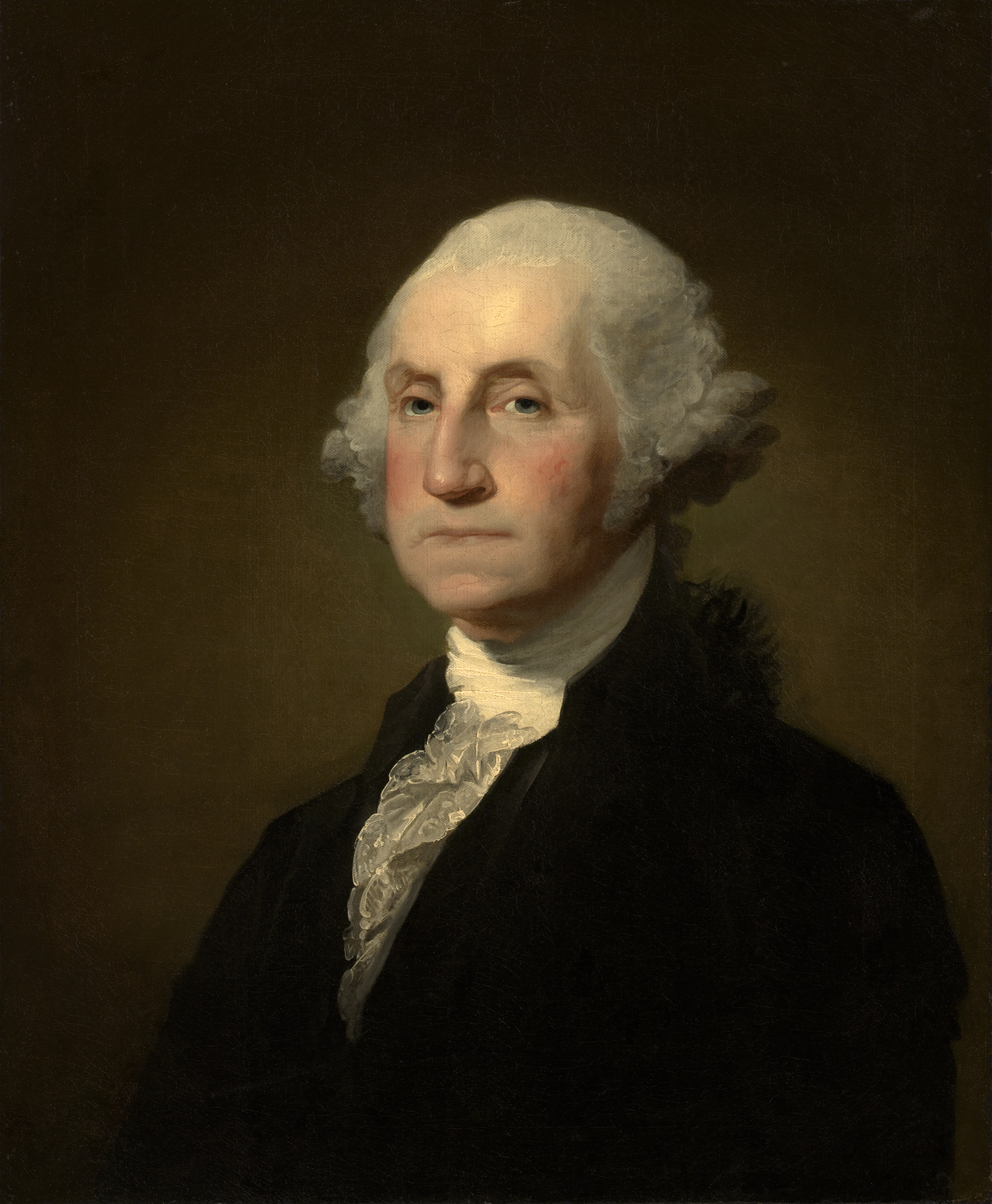
GEORGE WASHINGTON - father of our country

File:Gilbert Stuart Williamstown Portrait of George Washington.jpg

CHRISTOPHER P. STEPHENS - Current proprietor of riverrun as well as the remarkable father of my remarkable children.


JOHANNES GUTENBERG - Father of Modern Printing


File:Gutenberg.jpg

Thursday, June 4, 2009

Closing - Gotham Book Mart

Andy Brown in his office at Gotham Book Mart
photo by Christopher Stephens, September 1979
The Gotham Book Mart did not shut down after its comprehensive sale of inventory. I thought it might. I thought people wouldn’t care much for new books on old shelves.
But Andy Brown knew modern literature. He had a good eye and the replacements he bought made a fascinating array of new books. Besides, the original manuscripts were still there. They had not been part of the sale to New Mexico. They lent prestige. And there were surplus copies of books that Gotham had published salted in amongst the new titles.
The history and the cache of the place where wise men had fished for so long helped maintain a momentum. The Gotham went on for 30 more years.
We were in the city for the rest of that decade. Christopher Stephens stopped into the Gotham frequently. He was pleased to see its continued success.
During the 1980s we moved our book operations north of the George Washington Bridge. We rarely visited.
There were rumors of money troubles, but who in the book business doesn’t routinely buy books beyond cash flow? There were hints of discord over the ownership of the building and other disagreements. We heard about it when Frances Steloff died and when Gotham changed locations and when financial difficulties got bad enough to threaten the store.
When Gotham finally did close its doors, there was plenty of loudly mournful reaction. (There might be a profound insight to be discovered in the fact that the media wailed when the store shut down in 2007, but not when it sold its guts in 1974.)
The people who wrote about the end and the gift to the University of Pennsylvania know a lot more about it than I do. I'm putting some links to their articles in. But Gotham closing is not really my story anyway.
There are ups and downs and various inevitable woes of commerce. For me the big story is that, in spite of everything, the grand Gotham Book Mart was open for business for almost 90 years.
Village Voice article
historical review of Gotham with pictures and info about Penn State
gothamist's take on it
Edward Byrne, poet and editor of Valparaiso Poetry Review remembers

Wednesday, June 3, 2009

Whatever Happened to all those Book Gems? - Gotham Book Mart

      Andy Brown sold all the contents of the Gotham Book Mart to the University of New Mexico in 1974.  What contents that was!  We spent three 24-hour days packing up signed first editions, beautiful books, literary classics, literary mavericks, experimental fiction, poetry of all sorts, previously banned books, and high-quality non-fiction.
     At the end of each day John, the librarian representing New Mexico in this mammoth transfer of books, performed the ritual of sealing the huge box-filled truck.  Then that truck drove away and the all-night crew began packing and piling up more boxes for the next day's truck.
     Some of the most priceless items were too physically slight to go into a box.  A thousand broadsides and countless pamphlets and other ephemera were carefully tucked into a wooden case for extra protection.  That case was the last thing packed onto the last truck.  It wasn't easy getting it on either because that last truck was packed tight.  We all watched.  It was the ending ceremony. 
     A short time later the NY Times quoted Jim Dyke, head librarian in NM, from a telephone interview.  Dr. Dyke said that he liked to think they had moved the Gotham Book Mart from the shores of the Hudson River to the shores of the Rio Grande.  I like rivers and I like books.  The quote particularly appealed to me.  But was it entirely true?   Did young scholars in New Mexico have access to those truckloads from NY?
     No.  Not all of them.  The wooden case was the first loss.  It didn't make it to New Mexico.  John's seal was more than broken.   That truck didn't even get there.  It broke down in Kansas City and the cargo  had to be completely unloaded and reloaded onto a new truck.  The stuff in the wooden case was irreplaceable.  Chris went slightly berserk.  He wanted New Mexico to sue the  trucking company.  The missing case accounted for about 10% of the total value.   Chris was sure that someone associated with the trucking company stole those treasures.  It didn't have to happen that way, but I know why Chris is so sure.  The idea of theft is so much more palatable than the idea of all that collectible ephemera being carelessly destroyed.  Even now, 35 years later, Chris fantasizes about those broadsides and pamphlets surfacing.

     The terms of the bond issue with which NM bought Gotham stipulated that the money must go for material, not accessioning costs.   This meant there wasn't money available to process the books.  Years later almost half the boxes were still unpacked.  That information whetted Chris interest.
     "Well Jim, if you aren't using them, why don't I buy them back from you?" Chris suggested.  I admired James Dyke.  He was intelligent and competent, self assured and upright.
     "No.  Can't do that," Jim explained.  "Those books are assets that belong to the people of New Mexico.    Legally and morally I'm prevented from selling those assets unless the people pass a referendum to condemn them."
     So the boxes remained as they were until Dyke retired.  His replacement was, no doubt, every bit as upright but he interpreted things differently.  He sold all those boxes to the respected and knowledgeable Peter Howard of Serendipity Bookstore in Berkeley, California. 

     So in the end the Frances Steloff/Andreas Brown Gotham Book Mart stock was scattered.  It didn't settle as a collection on any riverbank.
     

Wednesday, May 27, 2009

Frank Scioscia in riverrun

1989 photo by Herb Levart (art book dealer)

Monday, May 25, 2009

The Scioscia Brothers

Frank Scioscia, founder of riverrun, comes from a big family. He's the 7th of 12 children; the 4th of 6 brothers. Their father loved books and newspapers.
Frank is pictured here with his 2 younger brothers, Donald and Carl in May of 1980. They're talking books.
Donald and Frank both worked at J.K. Gills Bookstore in Portland Oregon in the 1950s. By the 1980s, each had his own small bookstore: riverrun and Books and Things.

Carl Scioscia had an executive position in the Harper & Row distribution warehouse in

Scranton, PA. Fran McCullough used to say it was a startling pleasure to see these two brothers at a sales conference, ironing out distribution problems together.

One of the older Scioscia brothers, Vance, didn't make a career of books. Vance didn't make a career of cattle ranching in the west either, which is what he'd always intended as a kid.

The oldest brother, John, did make a career in books. He opened a store in New Brunswick, NJ called Old York Bookstore.

Another brother, Gabriel, was a teacher and a union agitator. Decades ago Frank Scioscia and I spent about an hour with Gabriel, not in jail exactly but confined in different small interrogation rooms of a police station. We were all picked up because we were distributing Gabriel's pamphlets at a strip mall. The pamphlets advocated the formation of a teacher union. Apparently these policemen had no notion of the concept of free speech.

The Scioscia Brothers enjoyed one another's company. They played bocce, argued politics, and discussed books.

note: unremembered photographers - not LSS

Friday, May 15, 2009

Larry Moskowitz -Book Dealer and Book Scout Extraordinaire

photos by Christopher P. Stephens - 1985  

     Larry Moskowitz is a book dealer in California.  He deliberately keeps his inventory small and is only interested in books that are in perfect condition.  He was like that as a book scout too.  Only first editions in perfect condition.
     Larry and Ralph Sipper had been partners in Joseph the Provider Books.  Ralph sold.  Larry bought. Each was gifted in his role.
     Larry combed through book stores and through other scouts' stashes of books.  He ferreted out first editions in perfect condition.
     We saw a lot of Larry when he still lived in New York.  He was a great scout and helped Chris Stephens fill even pretty obscure back orders from Chris' Sixties catalogue.  Larry had a very good memory, an especially superb visual memory.   If he'd seen a book, he could find it.
     Larry would regularly bring a couple of shopping bags to Chris.  They'd be hard-to-find copies of  1960s authors or Latin American authors in English translation, another category that kept generating back orders for Chris.   Larry traded the shopping bags for a couple of rare modern classics.
     At that time, in the 1970s and 80s, Chris' backorders were from university libraries.  They were buying Chris' recommendations for their English departments.  The libraries didn't require perfect copies.  The books were for reading.  They were going into circulation.
     Chris knew this.  Larry knew this.  It didn't matter.   Larry's shopping bags of titles from Chris' Sixties catalogue were filled with the best.  First editions in perfect condition.  The libraries didn't care, but Chris and Larry did.


Larry Moskowitz and Ralph Sipper grew up together.  They were school chums before they were book business partners.  Ralph wrote a book about Larry, Larry Moskowitz: Man of Espirit, published by Oak Knoll Press.

Thursday, May 14, 2009

PPB


The cost of paper, printing and binding, PPB, is calculated for each book and comes to around $3.00. There are also warehousing and transportation costs directly associated with that book.
A publishing company cannot survive, let alone flourish, unless most of the books it produces contribute revenue toward editorial, advertising, royalty, and plant costs also. In accounting terms though, PPB is the cost of the book.
PPB is a somewhat artificial number. Still, publishers like to recover PPB on remainder copies of a book that they are letting go out of print. In the 1970s winning remainder bids were usually less than PPB. This was disappointing to the publisher but it was better to get something for the books rather than nothing.
In an extreme example of this, Ted Maass, then V.P. in charge of sales at Simon & Schuster, urged Chris Stephens to buy the remaining 1100 copies of Wolf by Jim Harrison for a penny a book. 1100 books for $110. Quite a deal. Ted knew that Chris was interested because Chris had already purchased 1000 copies of the same book at quite a bit more.
Chris was interested. He believed in Jim Harrison who is listed as one of the authors in Chris' famous Sixties Catalogue.
Limited space forced Chris to reluctantly decline the great deal. It didn't make sense for us. It did make sense for Maass to try though. A penny was a tiny fraction of PPB but it would cost a nickel each to have the books ground up. The sale would have made a 6 cent swing per book for Simon & Schuster.
Not everyone saw it that way though. Thomson E. Murray didn't. In the 1980s he was the manager of remainder sales at Doubleday.
Many authors have a clause in their contracts that allows them to purchase copies of their book at PPB when it becomes a remainder. Charles Newman had such a clause. Newman had been editor of the Tri Quarterly Review for many years. He also wrote alternative fiction. Dial, then an imprint of Doubleday, published Newman's novel, White Jazz.
White Jazz went out of print in the fall of 1985. Newman asked Stephens to buy the remaining copies and put the title back in print under Stephens' Ultramarine Publishing Company. Chris was happy to. Charlie offered to exercise his option to purchase at PPB. Chris said, "No. no. We'll handle this as if we don't know each other. I'll bid on White Jazz at the next remainder sale."
Chris bid 15 cents per copy. He was the only bidder. He should have won the bid and purchased the remainder at that price. But it didn't happen that way. Manager Murray was personally insulted by the low bid. He told Chris he would have those books ground up before he would let them go at 15 cents.
"That doesn't make sense," said Chris. "It will cost the company money to have them ground up."
Murray didn't care. He was incensed. He said he'd destroy them on principle.
Maybe he was playing chicken. Neither Stephens nor Newman cared to chance it. Chris bought the entire remainder at PPB. Which was much more than was sensible.
Doubleday was right in a way. Sales were slow. It didn't make financial sense to pay the warehousing and distribution expenses of keeping it in print.
But in the bigger picture Ultramarine was right. White Jazz is an interesting piece of experimental fiction by an important author. Still in print almost 25 years later, it has been available to the occasional - yet keenly interested - reader all that time. The title's in-print status has actually outlasted the author.

PPB is one measure of a book's cost but what's the measure of a book's value?


books by Charles Newman:
New Axis
The Promise Keeper
A Child's History of America
There Must Be More to Love Than Death
White Jazz
The Post-Modern Aura: the Act of Fiction in an Age of Inflation

reviews of Jim Harrison's books from The New York Times
an interesting article about Jim Harrison


Sunday, May 3, 2009

More Conversation With Marsha Cohen - Editor, Writer


In 1970 Marsha Cohen sought adventure. She took a freighter from Brooklyn to the Netherlands. There were only 12 passengers on board.

I was impressed. How did she select the country? Did she already know Dutch? Marsha laughed.

“No,” she said. “In fact, I may not have realized they even spoke a different language there.

“I followed a cousin of mine who’d gone to the Netherlands to escape being drafted and going to Vietnam. It was after all 1970. Through the cousin I met my husband, Dom.”

Dominique Boer was working a Dutch publishing company, Elsevier. Of course Marsha wanted to stay in the Netherlands. She even learned Dutch.

She was in love. “To stay, I needed a job,” says Marsha. “Dom told me that Elsevier had a scientific division where they published journals in English, things like Brain Research. I applied there and started working as a freelancer That was perfect for my non-existent immigration status.

“About a year and a half later we came to the states and married. After 6 months in New York, we returned to The Netherlands. We settled in Haarlem, we had children and I continued doing free-lance work. Dom had a new job as editor in chief of a popular science magazine at Holland’s largest magazine publisher VNU.

“VNU wanted to break into the U.S. market with a scientific magazine for young people. There wasn’t anything like that at the time. ”

“So back we came to the States to develop the magazine. We called it Science Illustrated and pitched it at 9-14 year olds. They gave him a retainer to set up an office and find employees. Dom hired good people who knew both publishing and science. “People like me. I did picture researching at NASA and places like that and I loved it,” says Marsha.

Unfortunately financial difficulties forced the publisher to terminate the Science Illustrated project just as it was ready to launch. ”It was awful.” In 1980 they gave Dom The Golden Handshake. That’s Dutch for The Golden Parachute.

Dom could have gone back to Holland and continued working at VNU but instead he and Marsha stayed in the US and started their own company: The Tappan Group. What did the Tappan Group do, I wondered.

“Anything,” said Marsha. “Anything someone would pay us to do. We got our first work from the Netherlands Chamber of Commerce in the U.S.A. We were to promote Dutch companies in America.

“We started a magazine called HollandUSA. Holland is loaded with international companies and we profiled them in the magazine to promote them in this country. Companies like KLM, Phillips, Shell, the financial company Nationale Nederlanden , ABNAmro bank. Once we wrote about a little Dutch company that manufactured high-end, well-made, beautifully designed clothing for children. Bloomingdale’s noticed Oilily. They placed an order, and the company took off.”

The focus of Holland USA. broadened to include promoting America to the Dutch. Dom interviewed state governors. Each promoted his state as an ideal place for Dutch companies to invest and prosper. Tennessee, for instance, sent a delegation to Holland to lure KLM to TN. They succeeded and Memphis became a KLM gateway city. It still is.

“We also did work for the Dutch government, starting with the Dutch IRS. That was key because it eventually took us back to Holland. We moved to the Hague because although Amsterdam is the capital of the Netherlands, the Hague is the seat of the government. All the government offices are there.” The Tappan Group worked for a bunch of the Dutch Ministries – it still does -- and via via Marsha landed up working for a group specialized in dredging. Dredging?.

Yep. Dredging. Because of The Netherlands’ location and history, the country has developed extensive maritime expertise. Many Dutch companies specialize in water management issues like dredging, land reclamation, dyke construction, urban water management. Just ask the folks in New Orleans who they turn to for advice.

When Marsha was asked to do an international English language dredging magazine, she of course said Yes. Magazine publishing was not a problem. But content was another thing.

Marsha started studying these water related issues. Her knowledge of US/Netherlands business ties, her background in science and her ability to communicate clearly in English and in Dutch combined to bring her to the unexpectedly fascinating world of water management. Now her specialty is dredging. Most of her writing, editing, and research, and publishing now have to do with dredging.

Who would have guessed? Marsha herself wouldn’t have.