Christopher P. Stephens, Bookman

Chris Stephens has been a book dealer since 1965 - earlier if you count childhood buying and selling.

Stephens has sold major collections to university libraries all over the world. He has operated appealing bookstores in Mt. Carroll, Illinois, Hastings on Hudson, NY and several in NYC, NY. He is a wholesale dealer to other bookstores all over the world.

Chris loves books.

Stephens now maintains a lively internet operation out of his new home in Scranton, PA.


Showing posts with label Christopher Stephens. Show all posts

Thursday, April 4, 2013

the missing bit more


Even as a Little Kid, Chris Stephens was a Big Reader.  He was a library regular.  He had an inquisitive mind too, but overwhelmlngly his was an acquisitive mind.  He acquired knowledge.  He acquired information.  He wanted to know things.
     Young Chris read about animals and trees and Native American tribes.  He read history and etymology.  He read about countries where the stamps in his stamp collection originated.  He read about coins and about moths and butterflies.
     Much later, when I met him, he was still collecting butterflies.  He looked great leaping through meadows with his net held high above his head.  Like Vladimir Nabokov, Chris collected moths, butterflies and interesting words.
     Young Chris read mostly non-fiction, but he read some fiction too.  Cowboy fiction.  Science fiction.  Baseball stories.  Comic books.
     Chris acquired so darned much information that he seemed a perfect candidate for the Quiz Kids Radio Show.  In the “green room”, before the show started, the personable Quiz Kids host chatted with Chris, taking notes with which to later betray Chris.
     Young Chris was too short to reach the microphone so an assistant got a couple of telephone books to put on Chris’ chair.  I don’t think those 4-inch thick telephone books even exist nowadays.  Three other kids sat at the table.  They were able to speak into their microphones without the assistance of height boosters.
     The red light went on for live radio.  The host asked questions.  Three little geniuses were eager to answer.  Not Chris.  It wasn’t his style.
    When Chris sat on his hands, even for easy questions, the host took out his notes and asked the kids obscure questions about Native Americans and insects and tiny countries that issued lovely stamps.  The other kids scowled.  Only Chris knew these particular answers.  He didn’t raise his hand though.  Didn’t want to.
    But it was radio.  No one could see whose hand was up and whose hand was quite resolutely down.
     “Ah.  I see little Chris Stephens has his hand up”, lied the host smoothly.  Trapped on live radio by an entertainment professional, Chris was forced to answer questions. He didn’t like it though, and wouldn’t come back to the show.
     Chris went back to the hobbies he loved: collecting interesting things and reading lots of books.  Now, ten Little Chris lifetimes along, these are hobbies he continues to love.
     His disinterests have endured all this time too.  For instance, I’ve always thought that Chris and I would make a great vaudevillian-style comedy team.  His extremely dry humor cracks me up.  He would be the straight man, delivering very funny lines without breaking a smile. For contrast, I’d be only too happy to ham it up a bit.
     Alas.  Even after all this time to reconsider, Christopher Stephens still has no interest in show business.

Clips from old quiz kids shows (Chris’ single show is not included)

NY Times article about Vladimir Nabokov and his alternate identity as  lepidopterist extrodinaire

Thursday, February 14, 2013

one riverrun stands alone


Frank Scioscia signed the lease for riverrun bookstore in 1978.  He loved the wooden floors and tin roof and, most importantly, the long open space for books. Shelves went up.  Books poured in.
A few years later the store was filled beyond reasonable capacity.
A storefront across the street became available, and Scioscia grabbed it.  We all joked about naming it “overrun”.
When Scioscia’s son-in-law, Chris Stephens, took over in 1994 he loaded books from his own book operations into both buildings and set up his desk on the south side.
For more than 30 years these 2 stores together were riverrun.  Customers would run back and forth across Washington Ave, gathering armloads of good books.
Now, the original store, the one on the north side of the street, is empty.  riverrun on the south side of the street carries on, like a lone twin.
It was incredibly hard to give up the north side but in the spring of 2012 we had to.  The landlord’s insurance company would not renew unless the structure supporting the floor was reinforced.  To reinforce the floor, the store had to be empty.  All those shelves.  All those books.
Now one could roller skate through the ghost-sections of philosophy  and cinema and fiction.  If one knew how to roller skate.
For books though, for really wonderful books, come to riverrun on the south side of the street.  12 Washington Avenue.

Monday, February 1, 2010

Monroe Wheeler - Publisher

photo by Christopher Stephens 1979

Monroe Wheeler walked into Canfield & Stephens Rare Books too late. The store was closed. The books had been sent to auction. Chris Stephens was dismantling bookshelves.
Wheeler looked around. "What's going on here? Are you remodeling?"

"I have some books."

He certainly did! He pulled 6 books out of a battered leather briefcase that didn't go with his sharp suit, white shirt and nice tie. The books were beautiful ones from Harrison of Paris Press.

Monroe Wheeler and Barbara Harrison published Harrison of Paris books from 1930 to 1934.

Some of the books Wheeler pulled out of the briefcase were limiteds or super limiteds. Chris wanted them. Monroe wanted to sell them. For cash.
Stephens explained the situation. Canfield & Stephens was disbanded and he didn't have sufficient personal cash in his pocket. Wheeler agreed to accept Chris' personal check "this once".

"I have lots more books in my apartment," said Wheeler. Monroe Wheeler lived with Glenway Wescott in an apartment on 51st between 2nd and 3rd Avenues - just around the corner from the closed Canfield & Stephens. There were handsome glass-covered bookshelves in the apartment and they were handsomely filled. There was one copy of each state of each Harrison of Paris publications on the shelves but there were plenty more tucked around the apartment. There were stacks of books in manilla envelopes or wrapped in brown paper and tied with string.

Again and again Chris Stephens put cash in his pockets and visited the book paradise. Stephens bought multiple copies of Venus and Adonis and The Typographical Commonplace Book and Hacienda and The Wild West and others.
Aesop's Fables was illustrated by Alexander Calder. Harrison of Paris did a special edition of 50, each with an original Calder drawing slipped in. After Chris had purchased several of these, he came to realize that the drawings were not put into a book until it was purchased. Wescott and Wheeler had a big folder thick with Calder drawings. Eventually Chris was allowed to select his drawing each time he bought another Fables. He thought it quite a grand thing to browse through that folder of Calder drawings.

Monroe Wheeler was old when Chris Stephens met him, but he was lively and sharp. He could remember details about the books and the people involved. He remembered, for instance, about H.T. Lowe-Porter's shabby translation of Thomas Mann's A Sketch of My Life.
Monroe and Wescott were appalled. The translation was sloppy and graceless. What could they do?
They could translate. The two of them worked on it together. They kept the respected Lowe-Porter name as the translator, but not the translation that they didn't respect. They used their own.

Harrison of Paris press list
Frognall Dibdin's book blog
biographical notes on Monroe Wheeler
1988 NY Times obituary for Wheeler
1987 NY Times obit for Glenway Wescott
Glenway Wescott Personally a biography - book
Alexander Calder web site


Sunday, January 3, 2010

Sixty Photographs - Alfred A. Knopf Sr & Jr


Alfred Knopf took photos of many of the intriguing people he and his wife, Blanche, had as friends and associates. Sixty of these photographs were selected to publish in the book, Sixty Photographs, which commemorated the sixtieth anniversary of Alfred A. Knopf, Publisher. The book was published in 1975.

Knopf started his publishing company in 1915. He and Blanche, ran it as a family business until 1959 when their son left Knopf Publishing to to start Atheneum. At that time Knopf blended in, quite happily, with Random House.

I love this book. The front cover of Sixty Photographs shows A.A.K. himself, as a young man, seated comfortably in a meadow a few years before he founded his publishing company. The back cover shows him as an old man seated comfortably in a similar meadow. On the pages in between, Knopf gives us a treat. The photographs have the unstudied charm of the enthusiastic amateur photographer. Unpolished, they're more intimate. Knopf includes anecdotes to accompany each picture. They read like a conversation. You and he are flipping through the photos and he's recollecting the people and the circumstances. Sixty Photographs is a heartening glimpse of a mid-20th century world of literature and art and music and publishing and friendship.

This book is readily available. You can get one easily at your local bookstore or over the internet. We got ours from Pat Knopf.

In the late 1970s Alfred A. Knopf, Jr invited Christopher P. Stephens up to his house in Connecticut to look at books. Of course Chris went. There were lots of books, nicely arranged on handsome shelves. Chris expressed interest in buying a beautifully inscribed author collection. "Oh no," said Pat. "Those are going to my daughter." Chris ended up with 3 or 4 cartons of good books that weren't going to Knopf's daughters or son. He brought them back to Canfield Stephens Books.

Pat Knopf was friendly and easy to talk to, says Chris. They talked books. They talked publishing. Knopf had been in publishing since his infancy. Chris expected him to have tons of ephemera tucked away in boxes and drawers. Chris expected piles of papers on the floors and desk tops and bursting forth from cupboards. There was no evidence of any of this.

"Don't you have any junky stuff around somewhere?" he asked.
Pat was bewildered. "What do you mean?"
"You know," Chris coaxed him. "Galleys. Proofs. Letters from authors. Production correspondance."
Knopf dismissed it all with a wave of the hand. "I don't keep any of that. I throw it all out when I'm through with it."

Although Pat Knopf threw out much that Stephens would have liked to buy, Chris still left happy. He had some very fine books. He brought Sixty Photographs home for our personal bookshelves.
That volume had to get used to quite a different environment. At our house we do have a lot of junky stuff around.


Alfred A. Knopf 1892 - 1984
Pat Knopf 1918 - 2009

A brief biography of Alfred Abraham Knopf, Sr. by Columbia University

The Alfred A. and Blanch Knopf Collection at University of Texas at Austin

NY Times Obituary for Alfred A. Knopf, Jr.

Sunday, August 23, 2009

Chris' Attitude About Book Ownership, in a nutshell

"If you've read every book you have, then you don't have enough books."

Sunday, June 21, 2009

A Tribute to Six Important Fathers on Fathers' Day

July 1988

FRANK SCIOSCIA - Father of riverrun bookstore


FAS is shown here with his 2 oldest grandchildren - themselves now the fathers of my very fine grandchildren.


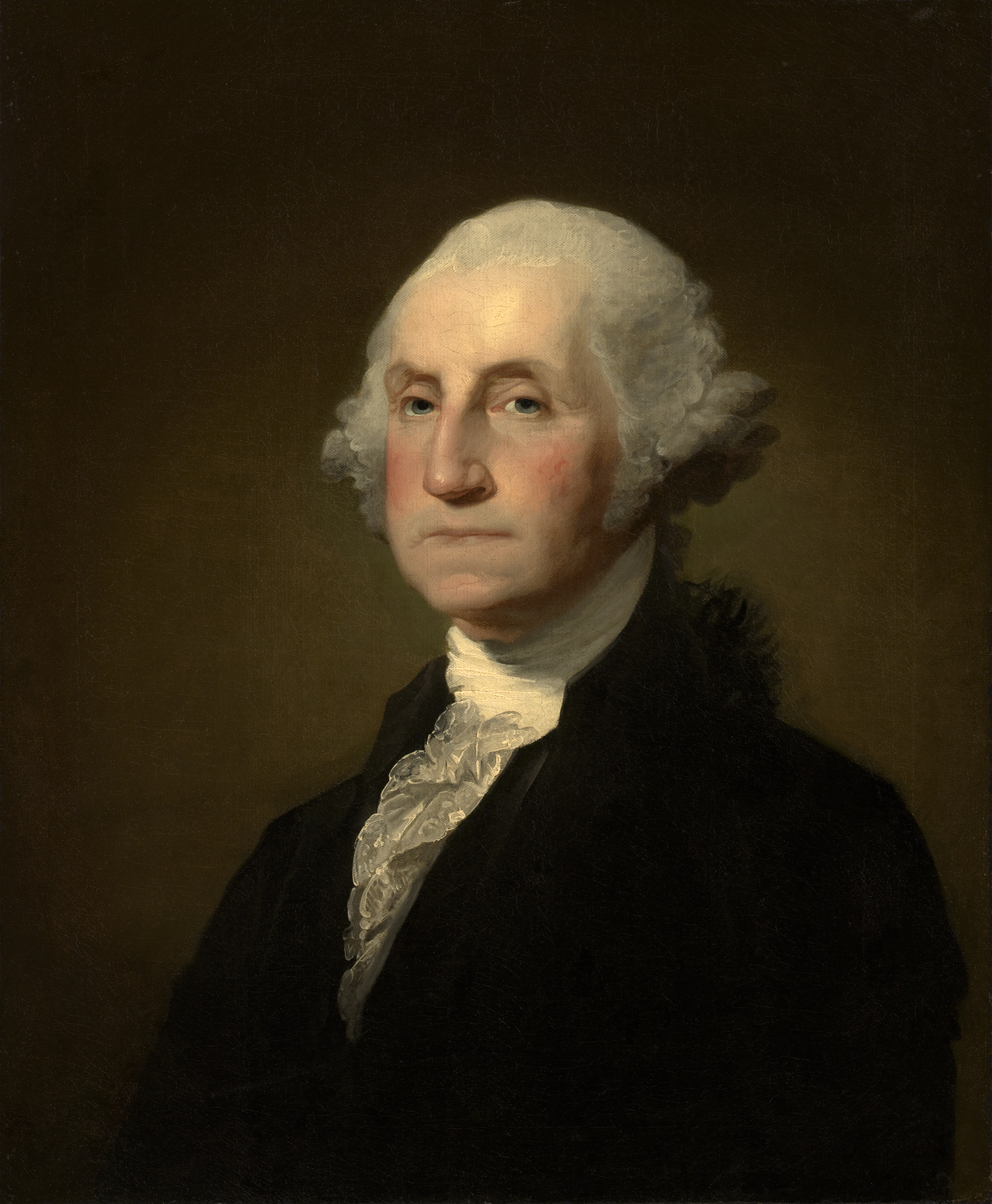
GEORGE WASHINGTON - father of our country

File:Gilbert Stuart Williamstown Portrait of George Washington.jpg

CHRISTOPHER P. STEPHENS - Current proprietor of riverrun as well as the remarkable father of my remarkable children.


JOHANNES GUTENBERG - Father of Modern Printing


File:Gutenberg.jpg

Monday, June 15, 2009

Boots


Whenever we have Gordon Parks' photography in stock, we file it in this alcove.
This is riverrun's section for books on photography, fine art, and decorative arts.

These aren't the photos I wanted for this post. I wanted a photograph of Gordon Parks' clothes closet, especially featuring his many pairs of cowboy boots.
Cowboy boots were not exactly a Parks' trademark, but they were definitely one of his basic wardrobe staples.
Sadly I don't have a photo of Gordon Parks' boots. A good opportunity to get one was wasted. I wasn't there and Chris, who was, didn't take it.

Chris Stephens and Wyatt Houston Day were invited to Park's apartment to look at his books a short time after Parks died in 2006. He had marvelous things in a bright, spacious apartment on the east side of Manhattan. Several of Parks' ex-wives were there when the bookmen arrived. The wives were gracious and lovely. They encouraged the bookmen to look everywhere.
In the process of looking everywhere, Chris came upon Parks' boot-filled closet. "Oh no," Chris protested when I asked if he had taken that picture. "That would have been intrusive."

I don't see it that way. Wouldn't it have been a great photo to have? So many of Gordon Parks' photos reached into the un-public parts of peoples' lives. I don't think he would have minded. I don't think the wives would have minded either.

Gordon Parks was his parents' 15th, and last, child. He was born in 1912. His parents were Kansas farmers. Gordon Parks was bursting with many talents outside the realm of normal farm life. Despite his difficult early years, Parks' talents carried him high and wide. He was accomplished. He was influential.
I knew he was a photographer - stirring photos rushing in at life and shouting out at us. He also had many other talents. Parks wrote novels and memoirs and poems and screenplays and musical scores. He directed Shaft and Shaft's Big Score. He wrote, produced, and directed The Learning Tree. He also wrote the memoir on which it's based and wrote the music for the movie.

Gordon Parks was admired for his many talents and for his wide-ranging projects. He was well liked too. He was famous for being so likable.
When Chris and Wyatt got into Parks' apartment, some things had already been sent to auction. It didn't matter. There were still many treasures and fascinating items left. The bookmen went for the many fine books. I would have gone for the boots.


memoirs by Gordon Parks:
1963 - The Learning Tree
1966 - A Choice of Weapons
1979 - To Smile in Autumn
1997 - Half Past Autumn

photography was my choice of weapons
NY Times article/obit

Monday, June 1, 2009

NM University System - Gotham Book Mart

     Mid 20th century brought rapid population expansion to the American southwest.  Suburban infrastructure was laid down over desert wilds.  In Arizona, New Mexico, Oklahoma and Texas roads and sewage lines and electricity were brought in.  Schools were built.
     In the 1970s massive bond issues were passed in these states for money to fill new university library shelves.  It was a good decade in the book market for dealers like Christopher Stephens.  Stephens enjoys building subject collections and he is good at it.  He had a solid relationship with university librarians.  They trusted his expertise and his vision.  He sold one collection after another.
     In 1974 one of the New Mexico librarians who had purchased many collections from Chris told him they'd like to buy a really good bookstore crammed full of great books.  Did he know of one that might be available?
     riverrun would have been perfect but it didn't exist yet.   Chris thought of Gotham Book Mart.   Andy Brown's interest was piqued but he wasn't sure.  Maybe.  Probably.
     Jim Dyke flew in from New Mexico. We took him out to eat at a fancy NY restaurant.  The restaurant gate keeper refused to recognize the regional formality of the western braided leather string tie with the turquoise slide that Jim wore.  They made him put on a broad, silk NY tie with stripes.  It was embarrassing.  For me.  Jim Dyke looked mildly amused at the pomposity of it.  He was completely at his ease.
     The dinner was delectable.   Chris talked up Gotham.  The next day Chris and Jim spent the day at the bookstore.  Jim walked slowly past every shelf.  He took photos of the books and spoke notes into a recording device.
     After Jim returned to New Mexico, Chris and I visited Andy to firm up plans.  We met upstairs in a conference room with shelves partway up the walls and very interesting pictures above the shelves.  There were four of us.  A man was with Andy, maybe a lawyer, maybe an employee.  We sat a a long table.  The doors were closed.  Chris Stephens and Andy Brown talked.  The guy with Andy and I listened to them.
      Andy had left strict instructions that he was not to be disturbed.  I found out later from Tim and Sandy Shortt, friends of ours and very dear school friends of Andy's, that they had visited Gotham at the very moment we were cloistered upstairs.   They'd asked to see Andy and were denied.  Their feelings were slightly hurt.  What could be so important that Andy couldn't break away to see old friends?
     Well, working out the emotionally charged details for selling a 50 year old literary treasure trove to a desert state 2000 miles away for lots of money.  That's what was so important.  We couldn't explain to Tim and Sandy because the deal was still in a fluid stage.
     There were a couple of other visits from New Mexico librarians, a few more superb dinners at arrogant NY restaurants.  Chris met with the principals a few more times.  I took one of the librarians to see the Cathedral of St John the Divine.  A deal was finally struck.
     It was basically this:  the university system of the state of New Mexico purchased all stock in the Gotham Book Mart with a single exception.  In the basement there were still many copies of certain titles that Frances Steloff had published.  NM wanted the first and best 6 copies of every state of every edition, but in the few cases where there were more than 6, those would stay in the basement.
     Andy wanted to continue running Gotham after the sale.  Chris and I agreed to get all the books packed and out in 3 days.  He was closed for less than a week.  He covered the front windows with brown paper.  A large sign said "Closed for Inventory"  which was cryptic and somewhat alarming to Gotham's devoted customers.
     We hired 3 shifts of temporary workers to pack and label around the clock.  Chris and I each worked 12 hours  thereby covering all 24.  We oversaw the temporary workers, packed and labeled.    One of the NM librarians stayed to be sure they got everything.  We arranged for 3 of those gigantic 18 or 24 wheel trucks and we packed up one each day.  We hadn't anticipated well.  On one of the days the St. Patrick's Day parade took over New York City and complicated the driving life of the trucker who was trying to drive that load out of the city and out onto our nation's highways.

     In the meantime, Andy had purchased scads of new books from publishers and wholesalers and remainder houses.  They arrived on skids.  As we emptied, Andy's staff filled.

     It was an exhausting but very exciting adventure.  On a personal note, we bought our own wonderful house amongst the trees with our commission.  Chris didn't have time to help look for the perfect house.  He commissioned me for that job.  I couldn't dawdle.  He was a bookman after all.  While I was shopping houses, Chris was busy spending away that commission pretty fast to buy up yet more marvelous collections of books.   
     

Friday, May 29, 2009

Poker


photos by Christopher P. Stephens August 1979 NYC


During the late 1970s and early 1980s there was a weekly book dealers' poker game. It was usually at Christopher Stephens' place.
Pictured here are some of the regulars:
Harvey Tucker, Black Sun Books
Jim Cummins, James Cummins Rare Books
Lenny Fox, Leonard Fox Rare Book
Chris Stephens, Christopher P. Stephens Bookseller

The book dealer poker players had a rollicking good time.

Tuesday, May 19, 2009

S & S and Ultramarine Publishing Company


Christopher Stephens started Ultramarine Publishing Company as a rescue operation to keep good books in print.
The precursor to Ultramarine was a short-lived book operation Chris started with Vine Smith. Chris and Vine were in their early 20s. They worked, and also played various high jinks, at Equitable Life Assurance Company on Avenue of the Americas in NYC. They were smart (too smart really) and energetic (too energetic really). They weren't that well suited to the insurance game. Chris was already leaning away from the steady paycheck of a wage earner, and toward the financial volatility a full time book dealer.
Chris talked Vine into investing in remainders with him. They started S & S Books.
"The big S, the first one, was for Stephens," says Chris. "The little S was for Smith."
Chris was enthusiastic. He immediately bought plenty of good books with their investment capital. Vine got nervous. He wanted out.
Chris started Ultramarine with the S & S Books inventory he bought from Vine.
But why did he call it Ultramarine Publishing Company?
"I named it for Malcolm Lowry's book, Ultramarine," Chris says.
Ultramarine was published in 1933 by Jonathan Cape Publisher in London.
"The book didn't sell well. Copies were stored in a London warehouse but like everything else in London, the warehouse was bombed during the war. The books burned.
"Then serious interest in Lowry developed later and Ultramarine became a legendary rarity. Always very hard to find."
So many books from Chris' Sixties catalogue were being remaindered. He saw Ultramarine as a way to save them. Save them from bombs and fire and book-grinding machines.
"Deserving books should stay in print," says Chris.

Ultramarine Publishing Company has 3, and almost 4, missions or projects. The first is keeping in print books that have actually been published and dropped by some other publisher. The second is publishing beautiful first editions of books that come out simultaneously with a trade edition from some other publisher. The Ultramarine first editions are very limited, signed by the author, and hand bound by Denis Gouey - fine binder. The third is producing inexpensive yet highly valuable author checklists and bibliographies for collectors.


Obviously this is where I should include a link to the company web page. Alas, it doesn't exist. Even if you google Ultramarine Publishing you get an assortment of listings, some us and some entirely different publishers with the same name.
Okay. Yes. I'll get right on this. I'll see what I can do about setting up an Ultramarine Publishing Company web page and trying to reconstruct a title list. It will be my summer project.

Monday, May 18, 2009

Sixties Catalogue


     In 1973 Christopher Stephens published a catalogue of books for sale that became a classic. Three things made this catalogue brilliant:
            1.) the timing
            2.) a strictly disciplined focus
            3.) knowledgeable endorsement of the authors
The precept was a collection of books published by promising American authors whose careers had begun in the 1960s.

Chris had begun compiling names even before the decade was out. In 1969 he showed an early draft of the collection to the Accessions Librarian at the University of South Florida. The university bought the whole collection, getting a jump on young writers for their library.
Chris reassembled the books. He fine-tuned the collection. By the time the published catalogue came out, he had already sold the entire collection to a number of university libraries around the country.
Stephens was very picky about which authors to include. Most did not have the recognition they have today. Back in the early 1970s, other writers seemed like the new, most recent voices – authors like Saul Bellow (Dangling Man 1944), Norman Mailer (The Naked and the Dead 1948), J. D. Salinger (Catcher in the Rye 1955), even Hemingway (The Sun Also Rises 1926).
The source of this catalogue’s big impact was the informed bet Stephens was making on these new authors. He stuck his neck out. These were substantial writers, had something to say, knew how to say it, and would continue to develop with time. Stephens predicted that these were the authors whose voices would speak in the future.
Some didn’t fulfill his promise, but remarkably, most did.
Later other book dealers put together similar collections. Some dealers weren’t as careful about the time parameters, putting in authors who’d published late in the 1950s or early in the 1970s. Most didn’t read all the books they listed. They did not insist on excellence in the authors and included some that Stephens had already dismissed as marginal.
Perhaps the difference between excellent and marginal is subjective. Chris Stephens didn’t think so.
That catalogue was active for almost all of the 1970s. Scouts carried back-order lists and Chris kept replenishing his supply of his Sixties Authors. They dominated our book shelves. Those were exciting times in the apartment. Always a good read only an arm’s length away. Those books were good company, even - when time was short and responsibilities long - just the spines.

Chris Stephens put a great deal of thoughtful time into his selection and assembled 154 dynamic writers who began their published career in the 1960s.

Authors in the Sixties Catalogue

This is the list of authors presented in the catalogue called "The Sixties" put out by Christopher P. Stephens, Bookseller, Inc


Aaron, Chester
Asher, Don
Baird, Thomas
Barthelme, Donald
Baumbach, Jonathan
Beagle, Peter S.
Bell, Charles
Berricault, Gina
Berry, Wendell
Blechman, Burt
Bradford, Richard
Brammer, William
Brautigan, Richard
Brodeur, Paul
Brower, Brock
Butler, William
Carpenter, Don
Chappell, Fred
Charyn, Jerome
Cohen, Marvin
Cole, Tom
Connell, Evan S. Jr.
Conroy, Frank
Coover, Robert
Corrington, John William
Crawford, Stanley
Crews, Harry
Cuomo, George
Curley, Thomas
Davis, L. J.
Dawkins, Cecil
Deaux, George
Delbanco, Nicholas
Dickey, James
Didion, Joan
Doctorow, E. L.
Douglas, Ellen
Elkin, Stanley
Ely, David
Epstein, Seymour
Exley, Frederick
Fair, Ronald
Faust, Irvin
Fine, Warren
Fox, William Price
Friedman, Bruce Jay
Friedman, Sanford
Fruchter, Norman
Gaines, Ernest
Gardner, John
Gass, William
Gerald, John Bart
Gloag, Julian
Gold, Ivan
Goldberg, Gerald Jay
Greenberg, Joanne
Grossman, Alfred
Haldeman, Charles
Harrington, William
Harris, Bertha
Harris, Marilyn (Mrs. Edgar V. Springer, Jr,)
Harrison, Jim
Hazzard, Shirley
Heller, Joseph
Herlihy, James Leo
Herrick, William
Hjortsberg, William
Hopkins, John
Jones, LeRoi
Kelley, William Melvin
Kesey, Ken
Kirkwood, James
Knowles, John
Kosinski, Jerzy
Lafore, Laurence
Lambert, Gavin
Langguth, A. J.
Larner, Jeremy
Leigh, James
Leonard, John
Linney, Romulus
Litwak, Leo
Lurie, Alison
McCarthy, Cormac
McConkey, James
McElroy, Joseph
McGuane, Thomas
McMurtry, Larry
Madden, David
Mano, D. Keith
Manville, W. H.
Manville, Bill
Marius, Richard
Markfield, Wallace
Markson, David
Marshall, Paule
Matthews, Harry
Matthews, Jack
Mayhall, Jane
Midwood, Barton
Mirsky, Mark
Momaday, Scott
Montgomery, Marion
Moynahan, Julian
Neugeboren, Jay
Newman, Charles
Nissenson, Hugh
Oates, Joyce Carol
Olsen, Paul
Olsen, Tillie
Ozick, Cynthia
Paley, Grace
Percy, Walker
Perutz, Kathertin
Piercy, Marge
Plath, Sylivia
Pollini, Francis
Portis, Charles
Price, Reynolds
Pynchon, Thomas
Rechy, John
Reed, Ishmael
Renek, Morris
Rogers, Thomas
Rogin, Gilbert
Rosen, Norma Stahl
Roth, Philip
Rovit, Earl
Rubin, Michael
Selby, Hubert, Jr.
Sheed, Wilfred
Shetzline, David
Simmons, Charles
Sontag, Susan
Speicher, John
Stegner, Wallace
Stern, Richard
Stewart, Edward
Stone, Robert
Suzenick, Ronald
Theroux, Paul
Updike, John
Wallant, Edgar Lewis
Weesner, Theodore
West, Paul
Williams, John A.
Wilson, Carter
Wilson, S. J.
Woiwode, Larry
Wright, Charles
Wurlitzer, Rudolph
Yates, Richard
Yount, John
Yurick, Sol

Wednesday, May 6, 2009

Bookmen

May 6, 2009

These four book dealers happened into riverrun today. They enjoyed talking with one another.
l to r

Wyatt Houston Day - sets up the yearly African Americana sale at Swann Galleries. He makes appraisals, and buys and sells African American material.

Mark Booker - is also interested in African American material, but likes to buy all sorts of things. He sells at flea markets in the area. "I could go to a flea market every day of the week," said Mark. "I must be crazy, but I like it."
Christopher P. Stephens - has had various book selling organizations since 1965. Chris has been the proprietor of riverrun for 15 years.

Gil Mott - is a book dealer in Connecticut. He has a large internet business specializing in history, philosophy and music. He is always on the lookout for unusual finds.
webpage: mottbooks.com

Monday, May 4, 2009

Steve and Chris Converse About Movies


     At first it looked like Stefan Kanfer and Christopher Stephens were going get lost in talking baseball.  "I always thought that Joe Torre was a clubhouse coach more than a field coach," said Steve.  Chris agreed.  Neither thinks Joe Girardi wields the same authority as Torre.
     Interesting, but then the conversation swung around to movies.   Even more interesting.
     Both men like dialogue.  They have movie dialogue at their finger tips too.  They played off each other, delivering dramatic turning points and classic bits from The Maltese Falcon, Third Man, Cincinnati Kid, My Favorite Wife, Casablanca.  It was great entertainment.
     The men spoke admiringly of Barbara Stanwyck's chilling performance in Double Indemnity and her marvelously lively performance in Ball of Fire.  In both of these movies Stanwyck walks down a staircase to great effect.
     Kanfer is working on a book now about Humphrey Bogart.  He's developed a superb impersonation.  Kanfer can talk like Bogart, rolling his words around like pebbles in his mouth.
     Right there in riverrun, he did Bogart as the terrifyingly wacko Queeg in Caine Mutiny, as Philip Marlowe in The Big Sleep, Rick Blaine in Casablanca, Linus Larabee in Sabrina, Charlie Allnut in African Queen, Fred Dobbs in Treasure of the Sierra Madre.
     "That's a great movie, Treasure of the Sierra Madre," said Steve.  Chris disagreed.  "Too ugly," said Chris.
     They shared enthusiasm for the others though.  They agreed that Fred Astaire outstripped Gene Kelly as a dancer and a personality.  Kelly was all ego.  Steve told a story about Gene Kelly's first wife, Betsy Blair.  She thought something must be the matter with her.  The marriage didn't seem to be working.  Of course not, said Blair's psychiatrist.  There just isn't enough room in your marriage for you.   Kelly takes up all the space, all the oxygen. 
     Chris and I had watched The Man in the White Suit the night before.
     "It was an interesting idea at the time," said Steve.  "He's done some good films.  I had lunch with Alec Guiness.  I asked him his favorite movie out of all he'd done.  Without a moment's hesitation Guinness says, 'Bridge Over The River Kwai'.  'Really,' I said to him.  'I thought some of those earlier black and whites were better.'  'Ah,' said Guinness, 'but Kwai was the first movie I had a piece of.' "
     Chris laughed out loud.  Both of them did.  I didn't get it.
     "It's all about the money," explained Steve.  "It's just money for these guys.  It isn't the art."
     "So The Bridge Over The River Kwai was the first movie where Alec Guinness shared in the profit," Chris explained further.
     Chris and Steve both love the Marx Brothers' movies.  They reenacted favorite parts.
      "Louisa doesn't like them," Chris told Steve.
      "No, that's right," said Steve.  "Women don't like them."
      "Why not?" I asked him.  I hadn't realized it was a gender thing.
      "Because the Marx brothers are mean to women," said Steve.  "Especially Groucho."  Steve went on to relate a couple of relevant anecdotes from his book on Groucho.
      Steve has a rich repertoire of movie anecdotes from his years as at Time and his deep research for his biographies of actors. 
     I could have listened to them talk forever.  All of us, May included, love movies and watch an astonishing number of them - especially astonishing considering our reading habits.

My March 19 posting has a complete list of Stefan Kanfer's books and some websites.  Here are just his movie books:
         (executive decision: I'm not counting Stardust Lost or The Voodoo... in this category)
Cartooning:  Serious Business
Groucho Marx: Groucho: 
Lucille Ball: Ball of Fire
Marlon Brando: Somebody

Friday, April 24, 2009

Donald Westlake by CPS

photo by Christopher P. Stephens - September 1981

     Donald Westlake very much liked this picture Chris took, so Chris gave him some prints.  Chris Stephens very much liked the books that Westlake wrote, so Westlake signed him a few.   
     Donald Westlake wrote a wide variety of novels, mostly mysteries with a light touch of humor.  He's best known for the Parker series written under the name Richard Stark.
     Chris enjoyed researching Westlake's books and various pseudonyms for the checklist he published on Donald Westlake. 


Westlake's own website, maintained up until just before he died on the last day of 2008.

Wednesday, April 22, 2009

Alma has lunch with Chris


     Alma Singer gave this picture of her husband to Chris Stephens.  In 1993, Alma wanted to sell the books out of her apartment on 86th Street where she and Isaac Bashevis Singer had lived for so long.  Someone recommended riverrun.
     Alma was a character.  She could be a bit cranky.  She could be abrupt.  Just like Chris Stephens.
     The two hit it off.  They talked and argued and were cranky and abrupt with one another.  They enjoyed themselves immensely.
     At noon Chris needed a food break, but not a conversation break.  "I'd like to take you to lunch," he told Alma.
     "Yes.  That would be nice."
     "Where should we go?  Can you recommend a good place?"
     Alma suggested a nearby deli.  "The food's not so good," she told Chris,  "But the price is right."
     Chris preferred good food.  He wasn't stinting on his pay for her books.  He didn't want to stint on lunch either.  "No. no," he said.  "Let's go someplace where the food is very good.  What's the best restaurant around?"
     Alma didn't think Chris should waste his money.  They argued.  Both were stubborn, but it looked as if they were going to have to eat where the price was right, and the food wasn't.
     Then Chris made the convincing argument.
     "You know, Alma, I'm buying books from you.  This lunch is a business expense.  It's tax deductible."
      Alma was delighted.  "You mean we'll go to lunch on the government's money?"  She directed Chris to a mighty fine restaurant and settled into her seat with satisfaction.  She spread out her menu in anticipation of additional satisfactions.  "My husband was a vegetarian," she told Chris, with relish.  "But I'm not.  I'm ordering beef."
     After a long and very good lunch, Chris and Alma returned to her apartment.  Chris packed up more boxes of books.   Later, it was such a pleasure to unpack those books at riverrun.  It felt good to handle books from their apartment - books that I. B. Singer had written and had read. Books they'd both read.  We integrated them into our stock.
      The picture didn't stay at riverrun.  Chris took it home.  He hadn't purchased that photo.  It was a gift from Alma.  Although Chris picked up the bill, that lunch was a gift from Alma too.

Monday, April 20, 2009

Canfield Stephens Books - opening party


invitation on 6x10 heavy laid paper, designed and handprinted by Ron Gordon


     Cass Canfield and Chris Stephens inaugurated their antiquarian bookstore with a marvelous party.  

Thursday, April 16, 2009

Opening Day

photo taken by an accommodating stranger

     The new Yankee Stadium is open for its first regular-season game.  It's a beautiful day for it.  Clear sky.  Warm sun.  Spring's sweet promise has touched trees and highway medians in New York City.
     Christopher Stephens and his four children are baseball enthusiasts and Yankee fanatics.   Chris and his daughter, Isabel, are at the game now.  (Top of the fifth, 1-0 Cleveland, Posada just threw out a renowned base stealer.  I know this and pass it on only out of family loyalty. )
     No worries for riverrun while Chris is truant.  Martin Kelly, riverrun manager, is a Mets fan.  Martin is on the job, attending to riverrun business.   

Wednesday, April 8, 2009

Pramoedya Ananta Toer


One afternoon, almost 20 years ago, Chris Stephens was in the William Morrow publishing offices. He was talking with an editor friend. The editor was planning a trip to southeast Asia. Conversation came around to Indonesian author, Pramoedya Ananta Toer.
"He's in Jakarta under house arrest," said the editor. "Carefully guarded. In a comfortable situation now, I understand, but still confined."
Pramoedya's earlier imprisonments had been far from comfortable.
The Indonesian government was allowing the editor to visit Pramoedya Ananta Toer. Stephens had an idea.
"Wouldn't it be great to get some signed copies of his books? They'd be the only ones. "
"You don't understand, Chris. His books are outlawed there. He's imprisoned because of his writing. You don't just stroll through those streets with his books in your arms."
"What about blank sheets? You could bring him blank sheets. He could sign them and then we could tip them into books when you brought them back here."
"That might work," said the editor.
That did work. Chris brought the editor a packet of blank book-sized pages. The editor brought them to Indonesia.
Pramoedya was reluctant to sign blank sheets. He worried that someone might frame a contract or a confession above the signature and he'd be in further trouble. The editor reassured the author. He got the signatures.
Back in the United States, the signed pages were tipped into existing books. Those signed books came with a good story.
A couple of years later, Pramoedya Ananta Toer was finally released from house arrest. He traveled. He went on a North American book-signing tour.

some of Pramoedya Ananta Toer's books that have been translated into English: The Fugitive (CPS's favorite), Corruption, The King The Witch and the Priest, The Earth of Mankind, Child of All Nations, Footsteps, House of Glass, House of Glass, The Girl From the Coast, A Mute's Soliloquy